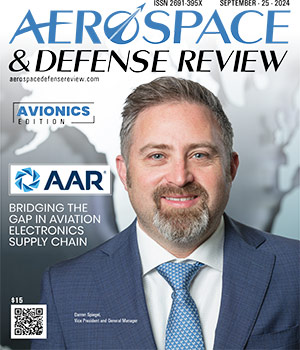
AAR Electronics: Bridging the Gap in Aviation Electronics Supply Chain

Aviation Electronic Components Company Of The Year - 2024

In the aviation sector, the integrity of flight operations hinges on the reliability of avionics technologies. Modern aircraft depend on a range of advanced systems, including flight management systems, radar, and communication tools, to ensure precise navigation, effective communication, and strong flight control. The global avionics services providers market is projected to soar, reaching an estimated valuation of $8.57 billion by 2031. This growth, anticipated at a CAGR of 7.5 percent from 2019 to 2031 is driven by several key factors. These include the increasing demand for advanced avionics systems in new aircraft models, the rising need for aircraft modernization and upgrades, and the growing focus on enhancing aviation safety and operational efficiency.

Key technology trends driving this growth include AI integration that enhances real-time decision-making. Next-gen air traffic management systems coupled with predictive maintenance improves navigation accuracy and reduces fuel consumption for greater efficiency and sustainability.

This edition of Aerospace and Defense Review presents a comprehensive overview of the latest developments in the avionics solutions sector, highlighting the innovations that are transforming the industry.

The edition features insights from Abe Weber, airport director at Appleton International Airport, who explores the advancements and innovations in airport management, detailing how emerging developments tackle challenges and improve business operations. Luigi Taliercio, vice president of operations at Unifi, discusses the challenges and unique aspects of managing charter services, such as timing, additional requirements, and the need for experienced staff.

The edition also features AAR Electronics, an independent provider of components for aviation, military, and harsh environments, known for its innovative dual-sided business model that ensures a seamless and efficient supply chain.

We hope you find the best-suited partner for your avionics needs and operational excellence.

Let us know your thoughts!
    Aviation Electronic Components Company Of The Year

    AAR Electronics
    AAR Electronics is an independent provider of aviation, military, and harsh environment components to commercial and government customers worldwide. Our product expertise and award-winning customer support helps customers increase efficiency and reduce costs while maintaining the highest levels of quality, service, and safety.

Avionics Info

Q1
What Do Top Avionics Solutions Companies Provide to the Aviation and Defense Industry?
Modern aircraft depend on avionics systems for navigation, communication, flight control, surveillance and cockpit visibility. Top Avionics Solutions providers develop and support the hardware, software and integrated systems that help pilots, operators and maintenance teams manage increasingly complex aircraft environments. The category spans commercial aviation, military platforms, business jets, unmanned systems and space applications. A weak avionics fit can create certification delays, maintenance complications or integration problems that surface long after deployment.
Q2
Why Is Demand for Top Avionics Solutions Increasing?
Aircraft operators are under pressure to improve safety, connectivity, fuel efficiency and fleet availability at the same time. Top Avionics Solutions are becoming more important as aircraft incorporate digital cockpits, advanced flight displays, satellite communications, cybersecurity protections and data-driven maintenance capabilities. Airlines, defense organizations and aerospace manufacturers are also dealing with stricter compliance requirements and growing data volumes. Most fleets already generate large amounts of information. The challenge is turning that information into decisions pilots, engineers and operators can actually use.
Q3
How Should Aerospace Organizations Evaluate Avionics Providers?
Technical specifications alone rarely tell the full story. Buyers usually look at certification history, integration experience, long-term support, repair capabilities and compatibility with existing aircraft systems. A useful evaluation exercise is reviewing how a provider handles software updates, component replacement cycles and regulatory documentation. An avionics platform may perform well in testing but create problems if spare parts, maintenance expertise or support access become difficult later. Aviation programs often remain active for decades, which makes lifecycle support a practical concern rather than a procurement detail.
Q4
What Business and Mission Value Do Avionics Systems Deliver?
Reliable avionics affect far more than cockpit functions. Better flight management can reduce fuel consumption, improve route efficiency and support safer flight operations. In military environments, avionics influence mission planning, situational awareness and communication reliability. Maintenance teams also benefit from systems that provide clearer diagnostics and fault reporting. A delayed component replacement can ground an aircraft. Better visibility into system health helps operators reduce downtime, avoid unnecessary inspections and manage maintenance schedules more effectively.
Q5
How Are Technology Trends Changing the Top Avionics Solutions Market?
Software-defined architectures, integrated modular avionics, cybersecurity protections, AI-assisted decision support and advanced connectivity are reshaping the market. Research and industry development efforts are focused on improving processing power, communication reliability, multicore computing and airspace awareness capabilities. At the same time, aircraft operators expect avionics systems to support future upgrades without requiring extensive redesign work. The strongest Top Avionics Solutions providers are increasingly judged on how well they balance innovation with certification requirements, safety standards and long-term maintainability.
Q6
What Should Decision-Makers Prioritize When Comparing Top Avionics Solutions?
Decision-makers should focus on aircraft compatibility, certification readiness, support infrastructure, cybersecurity protections and upgrade flexibility. It is also worth examining how providers handle integration with existing flight systems, maintenance workflows and communication networks. The most expensive option is not always the safest choice, and the lowest-cost option can create expensive retrofit work later. Top Avionics Solutions are typically evaluated on how reliably they perform in real flight conditions, how easily crews can operate them and how effectively support teams can maintain them throughout the aircraft lifecycle.