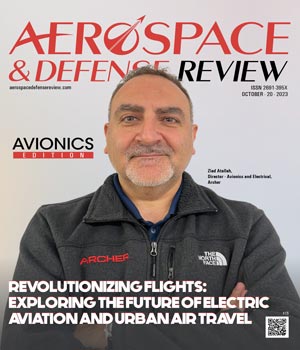
Revolutionizing Flights: Exploring The Future Of Electric Aviation and Urban Air Travel

Top 10 Avionics Services Companies - 2023

Aviation is essential to international trade and economic growth. The global economy is anticipated to increasingly rely on international trade in the coming years. Projections indicate that world trade will nearly double, expanding at more than twice the pace of global GDP growth. Air freight offers unparalleled speed and reliability over long distances. Air freight is primarily reserved for delivering lightweight, compact, perishable goods with high unit value. The aviation industry serves as a lifeline for exporters dealing in perishable items such as food and flowers, many of which are situated in specific regions. These businesses heavily depend on air transport to reach their export markets.

The global aviation market, anticipated to reach nearly USD 24.8 billion by 2027, is driven by several key factors. The sector is crucial in promoting economic growth and opportunities, particularly with the ongoing development of supersonic and electrically powered commercial aircraft. Cutting-edge technologies like robotics, the Internet of Things (IoT), and autonomous aircraft systems are reshaping the industry. Alternative fuels are emerging as a vital component, promising to bring substantial changes supporting environmental protection within aviation. Investments in AI and big data present promising avenues for enhancing safety, efficiency, and sustainability in the aviation sector. These technologies can optimize aviation infrastructure and airspace utilization, ultimately ensuring a more sustainable and eco-friendly future for air travel.

This Aerospace and Defense Review edition brings readers key developments in avionics through thought leadership articles by Ziad Atallah, Director - Avionics and Electrical, Archer, and Bob Zimering, Ph.D., Quality Director, Lockheed Martin Space.

Ziad Atallah discusses the rapid development and adoption of electric vertical take-off and landing (eVTOL) aircraft and highlights the technological advancements and innovations that make eVTOL aircraft a reality. Bob Zimering emphasizes adopting Additive Manufacturing (AM) technology in the Aerospace and Defense (A&D) industry.

In this edition featuring the Top 10 Avionics Services Providers in 2023, we hope you find the appropriate company suited to your business requirements.
    Top Avionics Services Companies

    Air Shunt Instruments Inc.
    Air Shunt Instruments has a strong legacy of almost four decades in the aerospace and defense industry. The firm has invested heavily in buying and stocking government surplus parts to support all kinds of aircraft repair work. It also plans to step into the manufacturing realm to support clients better.
    Ibeos
    Ibeos is small business founded in 2013 with the goal of developing high-reliability spacecraft electronics with drastically reduced costs and schedules. It provides high quality avionics that are accessible to cost-constrained missions at an affordable cost.
    Aero Instruments & Avionics
    Aero Instruments & Avionics is an esteemed independent leader, excels in avionics and instrumentation maintenance. Their global services encompass commercial, military, and regional aircraft. With expertise dating back to 1968, they focus on flight displays, indicator controls, autopilot systems, and aircraft accessories, maintaining industry certifications as a Part-145 repair center, including FAA, EASA, and ASA9110 approval.
    Aerocheck MRO
    Aerocheck MRO, a world-class aircraft maintenance firm, prioritizes meticulous work and top-notch results. With decades of aviation experience, they provide tailored services for maintenance needs, from minor repairs to full overhauls, executed with precision and speed by industry veterans.
    Air Accessories & Avionics
    Air Accessories & Avionics specializes in the repair and overhaul of a wide range of avionics and electromechanical accessories, boasting over one hundred and fifty years of combined aviation experience. The company has built an outstanding reputation for delivering exceptional services, offering dependable turnaround times, and competitive pricing.
    Forge Flightworks
    Formerly known as Carpenter Avionics, Forge Flightworks, the premier avionics service center in the MidSouth, is an award-winning FAA Authorized Repair Station. They specialize in avionics, aircraft interiors, and airframe systems for a wide range of aircraft. Their extensive product line, featuring all major brands, demonstrates their steadfast commitment to customer satisfaction and exceptional capabilities.
    Logicircuit
    Logicircuit provides a proficient team of professionals and a product portfolio for assistance. Distinguished from firms overcharging or outsourcing for cost reduction, Logicircuit’s skilled US-based specialists offer cost-effective support for efficient DO-254/DO178C compliance with integrity and expertise.
    RTX
    RTX unites three market-leading enterprises – Collins Aerospace, Pratt & Whitney, and Raytheon – operating cohesively to address aerospace and defense’s most profound inquiries and resolve its most formidable challenges.
    Stevens Aerospace and Defense Systems
    Stevens Aerospace and Defense Systems, a prominent American company, excels in aircraft maintenance, repair, refurbishment, and avionics upgrades for both private and military aircraft. Their proficiency spans from the renowned King Air turboprops to top-tier names in contemporary business jet travel such as Citation, Embraer, Challenger, and Gulfstream.
    uAvionix
    uAvionix, a frontrunner in communications, navigation, and surveillance (CNS) solutions for both unmanned and manned aircraft, spearheads the creation of low SWaP avionics. They provide a comprehensive suite of safety solutions for drones and General Aviation, including collision avoidance, remote identification, and ADS-B technologies. uAvionix remains dedicated to advancing aviation safety through cutting-edge innovation.

Avionics Info

Q1
What Do Top Avionics Solutions Companies Provide to the Aviation and Defense Industry?
Modern aircraft depend on avionics systems for navigation, communication, flight control, surveillance and cockpit visibility. Top Avionics Solutions providers develop and support the hardware, software and integrated systems that help pilots, operators and maintenance teams manage increasingly complex aircraft environments. The category spans commercial aviation, military platforms, business jets, unmanned systems and space applications. A weak avionics fit can create certification delays, maintenance complications or integration problems that surface long after deployment.
Q2
Why Is Demand for Top Avionics Solutions Increasing?
Aircraft operators are under pressure to improve safety, connectivity, fuel efficiency and fleet availability at the same time. Top Avionics Solutions are becoming more important as aircraft incorporate digital cockpits, advanced flight displays, satellite communications, cybersecurity protections and data-driven maintenance capabilities. Airlines, defense organizations and aerospace manufacturers are also dealing with stricter compliance requirements and growing data volumes. Most fleets already generate large amounts of information. The challenge is turning that information into decisions pilots, engineers and operators can actually use.
Q3
How Should Aerospace Organizations Evaluate Avionics Providers?
Technical specifications alone rarely tell the full story. Buyers usually look at certification history, integration experience, long-term support, repair capabilities and compatibility with existing aircraft systems. A useful evaluation exercise is reviewing how a provider handles software updates, component replacement cycles and regulatory documentation. An avionics platform may perform well in testing but create problems if spare parts, maintenance expertise or support access become difficult later. Aviation programs often remain active for decades, which makes lifecycle support a practical concern rather than a procurement detail.
Q4
What Business and Mission Value Do Avionics Systems Deliver?
Reliable avionics affect far more than cockpit functions. Better flight management can reduce fuel consumption, improve route efficiency and support safer flight operations. In military environments, avionics influence mission planning, situational awareness and communication reliability. Maintenance teams also benefit from systems that provide clearer diagnostics and fault reporting. A delayed component replacement can ground an aircraft. Better visibility into system health helps operators reduce downtime, avoid unnecessary inspections and manage maintenance schedules more effectively.
Q5
How Are Technology Trends Changing the Top Avionics Solutions Market?
Software-defined architectures, integrated modular avionics, cybersecurity protections, AI-assisted decision support and advanced connectivity are reshaping the market. Research and industry development efforts are focused on improving processing power, communication reliability, multicore computing and airspace awareness capabilities. At the same time, aircraft operators expect avionics systems to support future upgrades without requiring extensive redesign work. The strongest Top Avionics Solutions providers are increasingly judged on how well they balance innovation with certification requirements, safety standards and long-term maintainability.
Q6
What Should Decision-Makers Prioritize When Comparing Top Avionics Solutions?
Decision-makers should focus on aircraft compatibility, certification readiness, support infrastructure, cybersecurity protections and upgrade flexibility. It is also worth examining how providers handle integration with existing flight systems, maintenance workflows and communication networks. The most expensive option is not always the safest choice, and the lowest-cost option can create expensive retrofit work later. Top Avionics Solutions are typically evaluated on how reliably they perform in real flight conditions, how easily crews can operate them and how effectively support teams can maintain them throughout the aircraft lifecycle.